Introduction
Think about the last time you wanted to hire a company or buy a product online.
What was one of the first things you did?
You probably searched for the business and visited its website.
Your customers do exactly the same.
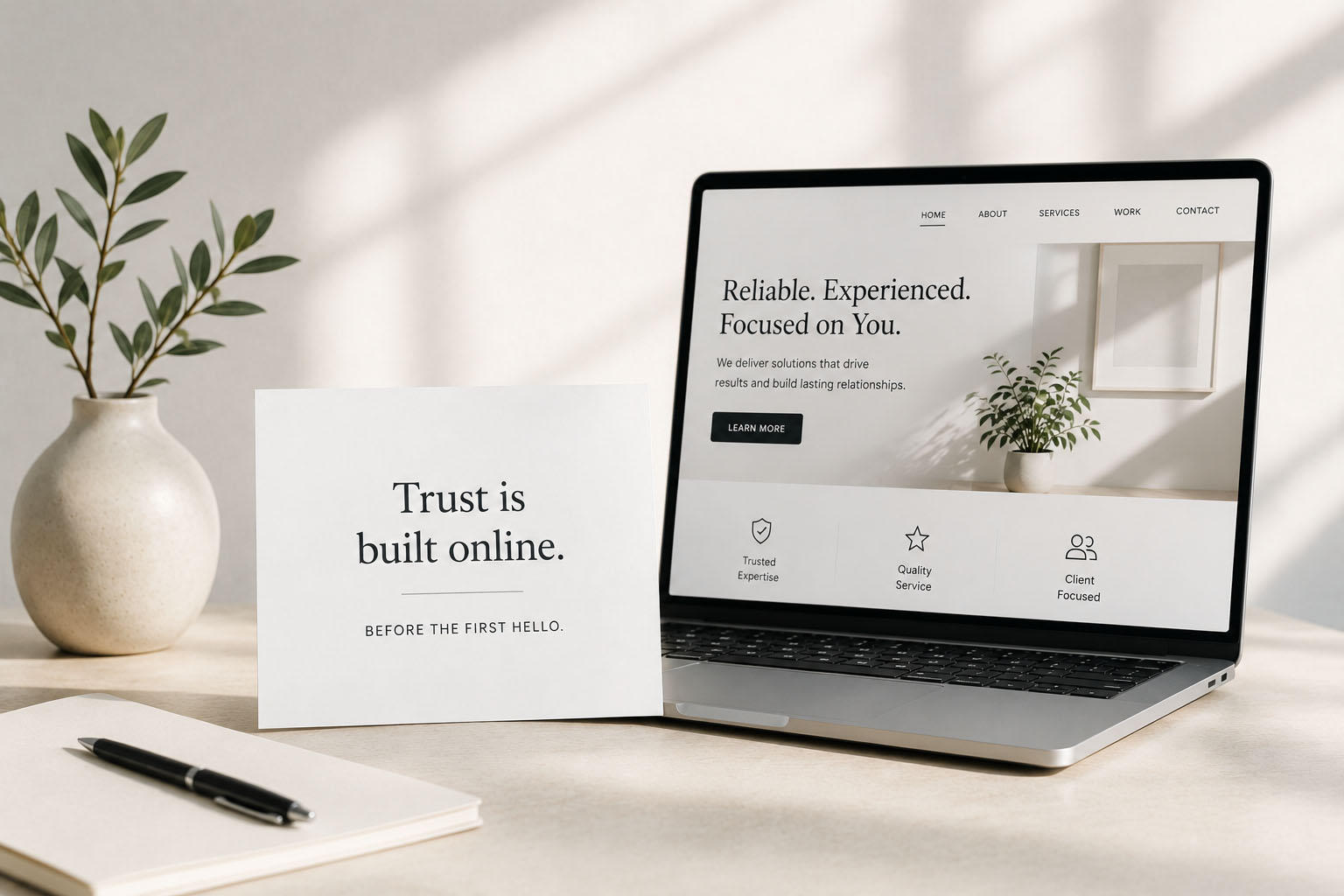
In today's digital world, your website often introduces your business long before you have the chance to speak with a potential customer. It acts as your online storefront, your sales representative, and your brand ambassador—all working around the clock.
The challenge is that visitors form an opinion about your business within just a few seconds. They quickly decide whether your business appears trustworthy, professional, and capable of meeting their needs.
A professional website isn't simply about looking attractive. It's about building confidence, reducing uncertainty, and encouraging visitors to take the next step.
Let's explore how a professionally designed website builds trust before a conversation even begins.
Why Trust Matters in Business
People buy from businesses they trust.
Whether someone is purchasing software, hiring a contractor, choosing a consultant, or selecting a nonprofit partner, trust influences every decision.
Without trust:
- Visitors leave.
- Enquiries decrease.
- Sales slow down.
- Competitors gain an advantage.
Your website plays a major role in establishing that trust.
First Impressions Happen Fast
Research consistently shows that users form opinions about websites almost immediately.
When someone lands on your homepage, they notice:
- Overall design
- Colors
- Images
- Layout
- Navigation
- Professionalism
They may not consciously analyze every detail, but they quickly develop a feeling about your business.
A clean, modern website communicates professionalism.
An outdated or confusing website creates uncertainty.
A Professional Design Reflects a Professional Business
Imagine walking into two offices.
One is clean, organized, and welcoming.
The other has broken furniture, peeling paint, and poor lighting.
Even before speaking to anyone, you've already formed an opinion.
Websites work the same way.
Professional design suggests that your business pays attention to quality and customer experience.
Consistent Branding Builds Recognition
Customers trust businesses that appear consistent.
Your website should use the same:
- Logo
- Colors
- Typography
- Messaging
- Tone of voice
Consistency makes your business look established and memorable.
It also strengthens your overall brand identity.
Clear Navigation Creates Confidence
Visitors should never feel lost.
If customers struggle to find information, they may assume your business is disorganized.
Good navigation helps visitors quickly locate:
- Services
- Pricing
- Contact information
- About Us
- Portfolio
- Blog
- Frequently Asked Questions
The easier your website is to use, the more confident visitors become.
Fast Websites Feel More Reliable
Nobody enjoys waiting for a slow website.
If pages take several seconds to load, visitors often leave before seeing your content.
Fast websites communicate efficiency.
They also improve:
- User experience
- Search engine rankings
- Customer satisfaction
- Conversion rates
Speed is one of the simplest ways to build trust.
Mobile-Friendly Design Matters
Today, many people visit websites from their phones.
If your website doesn't work well on mobile devices, visitors may question whether your business keeps up with modern technology.
Responsive design ensures your website looks and functions well on:
- Smartphones
- Tablets
- Laptops
- Desktop computers
This creates a better experience for every visitor.
High-Quality Content Demonstrates Expertise
People visit your website looking for answers.
Helpful content positions your business as knowledgeable and trustworthy.
Examples include:
- Detailed service pages
- Educational blog articles
- Frequently asked questions
- Case studies
- Guides
- Success stories
When your content genuinely helps visitors, they're more likely to trust your business.
Customer Testimonials Provide Social Proof
One of the strongest trust signals is hearing from satisfied customers.
Testimonials show potential clients that others have already had positive experiences with your business.
Instead of simply saying you're reliable, let your customers say it for you.
Including:
- Client testimonials
- Google Reviews
- Success stories
- Case studies
helps reduce uncertainty for new visitors.
Professional Photography Makes a Difference
Real photos build credibility.
Instead of relying solely on generic stock images, showcase:
- Your office
- Your team
- Completed projects
- Products
- Events
Authentic visuals make your business feel more approachable and genuine.
Security Reassures Visitors
Customers expect websites to protect their information.
Simple trust signals include:
- HTTPS encryption
- Secure contact forms
- Privacy policy
- Terms and conditions
Security isn't just about technology—it also demonstrates professionalism.
Easy Contact Information Encourages Action
Visitors should never have to search for your contact details.
Clearly display:
- Phone number
- Email address
- Business location
- Contact form
- Social media links
Making it easy to reach you builds confidence and increases enquiries.
Fresh Content Shows Your Business Is Active
An abandoned website creates doubt.
Customers may wonder:
- Is this business still operating?
- Are these services still available?
- Is the information accurate?
Regularly publishing blog posts, updating service pages, and adding recent projects show that your business is active and growing.
Common Website Mistakes That Reduce Trust
Avoid these common problems:
- Outdated design
- Broken links
- Slow loading pages
- Poor mobile experience
- Low-quality images
- Missing contact information
- Grammar and spelling mistakes
- Inconsistent branding
Small issues can have a surprisingly large impact on customer confidence.
Why Trust Leads to More Conversions
Trust influences every stage of the customer journey.
When visitors trust your business, they're more likely to:
- Stay on your website longer.
- Read additional pages.
- Request a quote.
- Contact your team.
- Make a purchase.
- Recommend your business.
A trustworthy website doesn't just attract visitors—it helps turn them into customers.
How Pixelwel Builds Websites That Inspire Confidence
At Pixelwel, we understand that a website is more than a collection of pages.
It's a business tool designed to build relationships.
Our websites are created with:
- Modern, custom designs
- Mobile-first development
- Fast loading speeds
- SEO best practices
- Strong security
- User-friendly navigation
- Professional branding
- Conversion-focused layouts
Every website is tailored to reflect your business and create a positive first impression that encourages visitors to take action.
Frequently Asked Questions
Why is a professional website important for trust?
A professional website creates a positive first impression, demonstrates credibility, and reassures visitors that your business is legitimate and reliable.
Can a website really influence customer decisions?
Yes. For many businesses, the website is the first interaction customers have with the brand. A positive experience increases the likelihood of enquiries and purchases.
What makes a website look professional?
Modern design, clear navigation, consistent branding, quality content, fast loading speeds, mobile responsiveness, and secure browsing all contribute to a professional appearance.
How often should I update my website?
Review your website regularly and update content whenever your business changes. Publishing fresh blog articles and showcasing recent work also helps maintain credibility and improve SEO.
Conclusion
Trust is one of the most valuable assets a business can earn, and your website plays a crucial role in building it. Long before a customer contacts your team, they evaluate your business based on the experience your website provides.
A professional website combines thoughtful design, useful content, fast performance, and clear communication to create confidence from the very first visit. It reassures potential customers that your business is reliable, experienced, and ready to help.
If your website no longer reflects the quality of your business, it may be time to invest in a stronger online presence.